
Rothenburg ob der Tauber: A Complete Guide to the Old Town, the Walls & the Christmas Market
What to see, when to come, and how to walk it — plus a self-paced audio tour for the streets themselves.
See What's Inside Buy the Audio Guide Listen to Preview Plan Your VisitHear the guide before you go
A 30-second sample — the same voice that walks you from Marktplatz to the Hospital Bastion.
What Is This Tour?
A self-guided audio tour you play on your phone as you walk. An offline GPS map shows where you are, and you start each story yourself when you reach the spot — so you keep your eyes on the half-timbered gables and the towers, not on a screen. Buy once, use offline, keep it for a year.
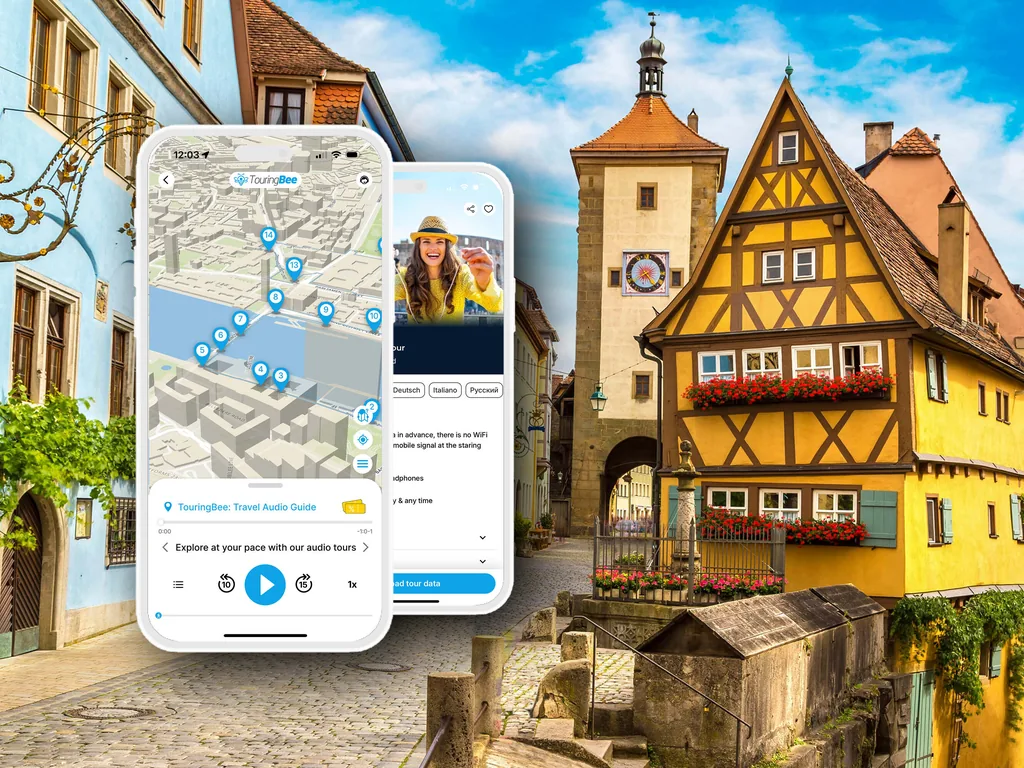
Rothenburg City Walk — Self-Guided Audio TourInstant access
- 100% offline — no Wi-Fi or data needed
- Offline GPS map — you start each track yourself at the spot
- 25 stops from Marktplatz to the Hospital Bastion
- Works on iOS & Android
- Walk it in 1.5–2 hours, at your own pace
Why Visit Rothenburg ob der Tauber?
Rothenburg ob der Tauber is a walled town of about 11,400 people that stopped growing four hundred years ago — and that is exactly why you can still walk it. War, plague and poverty froze the old town in place; the twentieth century nearly erased it; donors from around the world put it back stone by stone.
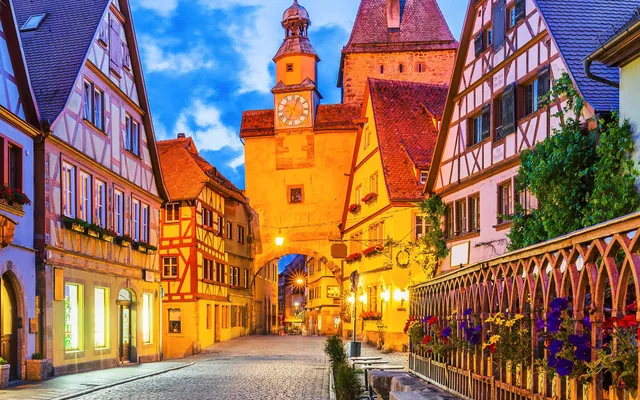
It sits on a spur above the Tauber valley in Middle Franconia, halfway along Germany's Romantic Road. The wall still runs the whole way round the old town, with a covered rampart walk carrying you along most of it, free, at any hour. Inside are cobbled lanes, painted gables, a town hall you can climb, and the most photographed street corner in the country. Come in December and the whole thing turns into a Christmas market. Come on a Tuesday in March and you may have the wall to yourself.
This guide walks you through what Rothenburg is, why it looks the way it does, when to come, and how to make the most of a day inside the walls. If you want the full story on the spot, the TouringBee audio guide walks it with you — 25 stops, offline, in your ears.
The Story of Rothenburg
A Castle, a Hill and a Free Imperial City
In 1070 a count looked at the hill above the Tauber and built a castle on it. A town grew up beside the castle a century later. Then, in 1274, King Rudolf of Habsburg made Rothenburg a free imperial city — it answered to the emperor and to nobody in between. That is the moment everything else follows from. Free imperial status meant money, and money meant walls, towers, a town hall and merchant houses with gables designed to be looked at.
The Meistertrunk: a Legend That Outlived the Facts
In the autumn of 1631 the Thirty Years' War arrived. Rothenburg had sided with the Protestants; the Catholic general Tilly took the town and, the story goes, condemned the council to death. Then he was offered a tankard of Franconian wine — three and a quarter litres of it — and made a bargain: if any man could drain it in one go, the town would be spared. The elderly mayor Georg Nusch stepped forward and drank the lot.
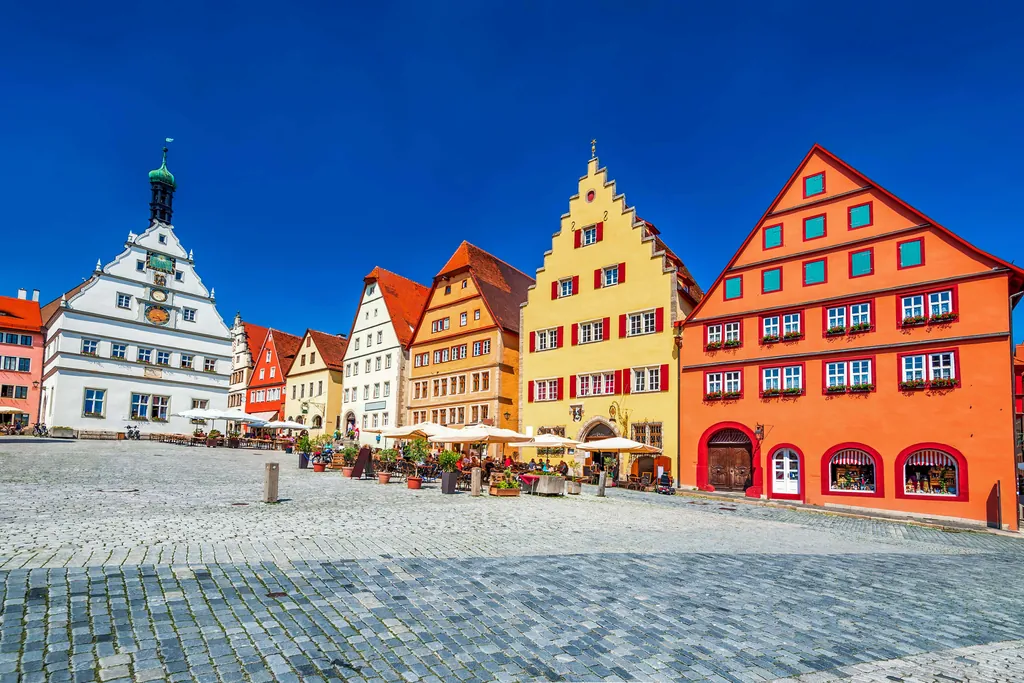
Be clear about what this is. The Meistertrunk first appears in a chronicle more than a century after 1631, and historians treat it as legend rather than record. But the town has kept it alive with a straight face ever since. On the Ratstrinkstube on Marktplatz, two windows flank the clock face; every hour from 10:00 to 22:00 they open and the mechanical figures of Tilly and Nusch play the whole thing out again. Whatever the archives say, this is now the story Rothenburg tells about itself.
Hear the Meistertrunk told where the clock figures reenact it. From €9.99 · offline · in English
Get the Audio GuidePoverty Is Why It Still Looks Like This
The war left Rothenburg exhausted. Sieges, then plague, then debt. The town stopped expanding, stopped rebuilding in the fashion of the day, and slid quietly out of history for two hundred years. No baroque makeover, no nineteenth-century boulevards driven through the middle. When Romantic painters and travel writers rediscovered it in the 1800s, they found something almost nobody else in Germany still had: a complete medieval town that had simply never been modernised. Preservation here was an accident of being broke.
31 March 1945 — and the Bricks With Names on Them
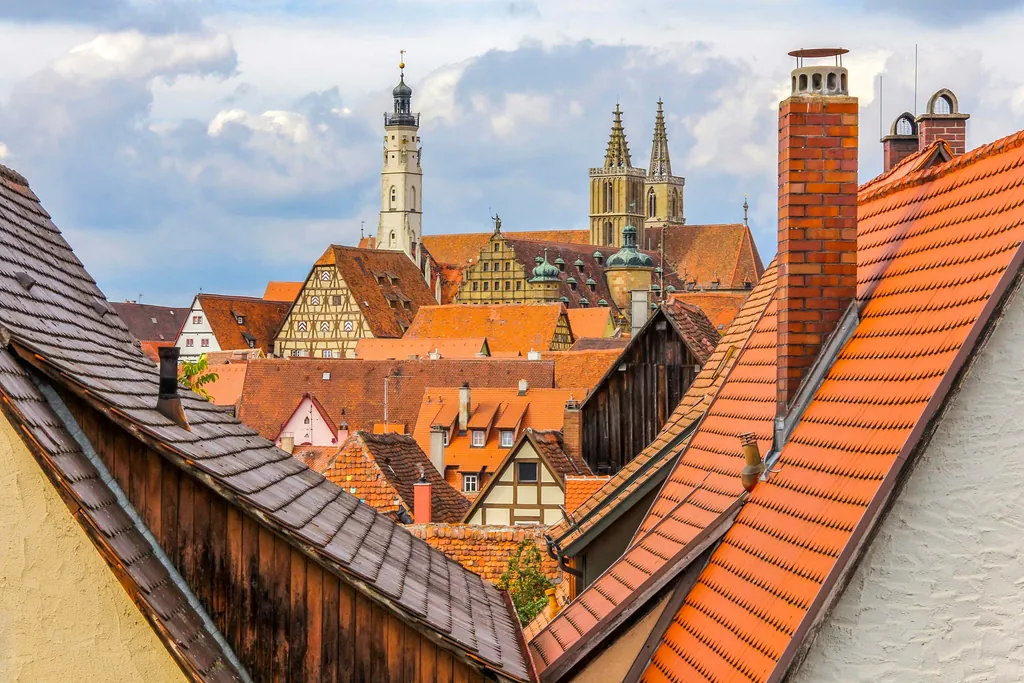
Then it nearly ended. On 31 March 1945, sixteen aircraft bombed Rothenburg. Thirty-seven people were killed; around 275 houses, six public buildings, nine watchtowers and roughly 600 metres of the town wall were destroyed — close to a third of the old town. What stopped the rest from going was a phone call: John J. McCloy, the US Assistant Secretary of War, who knew the town, ordered General Jacob Devers not to shell it. Rothenburg surrendered instead.
The rebuilding took decades, and much of it was paid for by donations from all over the world. Look closely at the restored stretches of wall as you walk them: individual bricks carry the names of the people who paid for them, in a dozen languages. It is the least medieval thing about the walls and one of the most moving.
Plönlein, and the Problem With Being Photogenic
Two lanes fork around a yellow half-timbered house with a fountain in front of it, one climbing to a tower, one dropping to another. That is the Plönlein, and it is on more German postcards, jigsaw puzzles and film backdrops than any other street corner in the country. It takes about ninety seconds to see. Get there before nine or after six if you want it without a queue of tripods — and then keep walking, because the streets behind it are where the town actually lives.
Still deciding what to fit into your day? Browse all our Rothenburg guides →
What You'll Discover on the Tour
A handful of the places and stories waiting inside the walls — the full route unfolds in the guide as you walk.
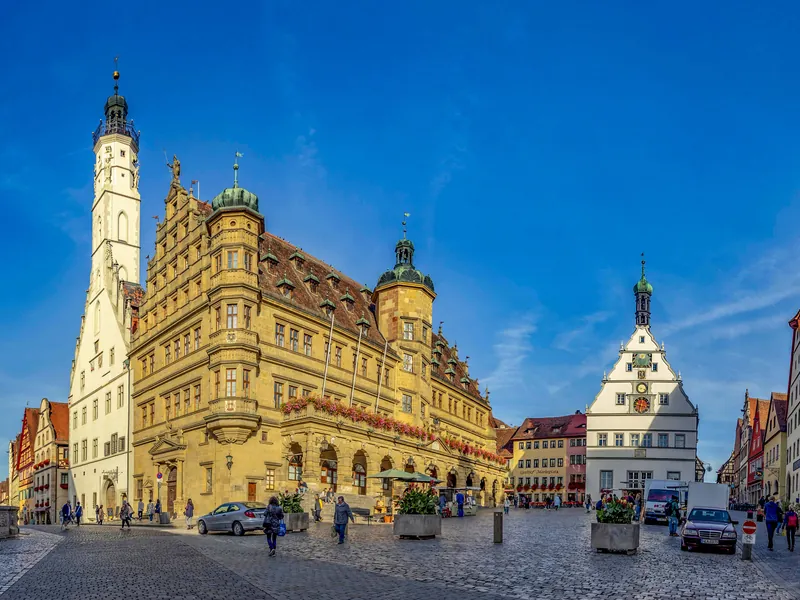
Marktplatz & the Rathaus
The heart of the town since the twelfth century — and a tower you can climb for the rooftop view.
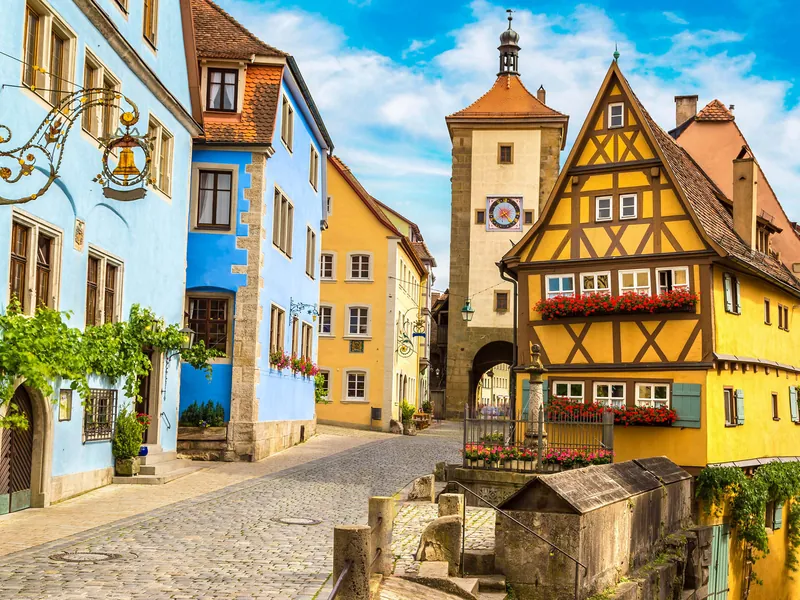
The Plönlein
Germany's most photographed corner: two lanes, two towers, one yellow house.
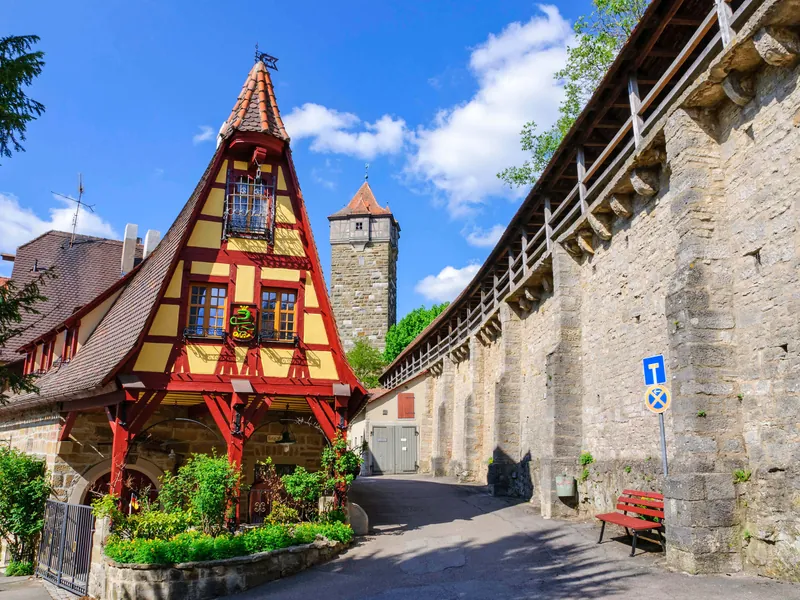
The Town Wall
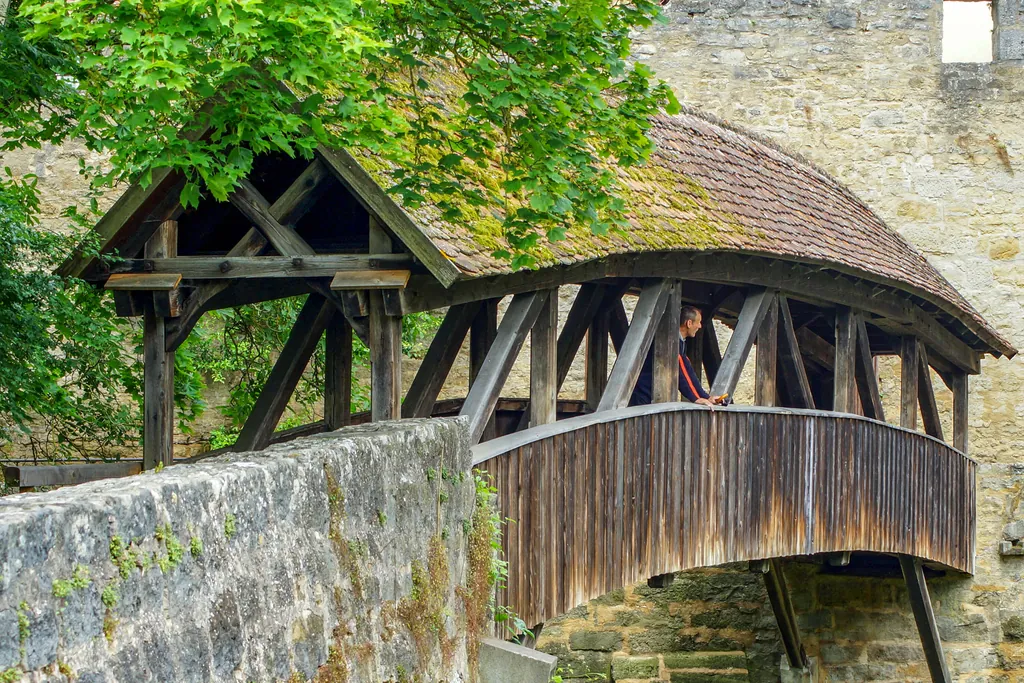
A covered walk right round the old town, free, with donor names set into the rebuilt stretches.
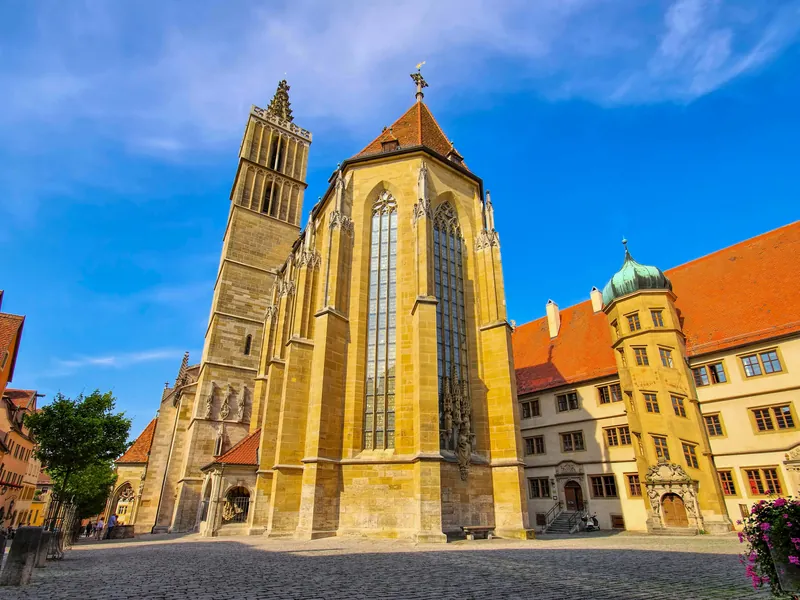
St James's Church
Home of Tilman Riemenschneider's Holy Blood Altar, carved without a drop of paint.
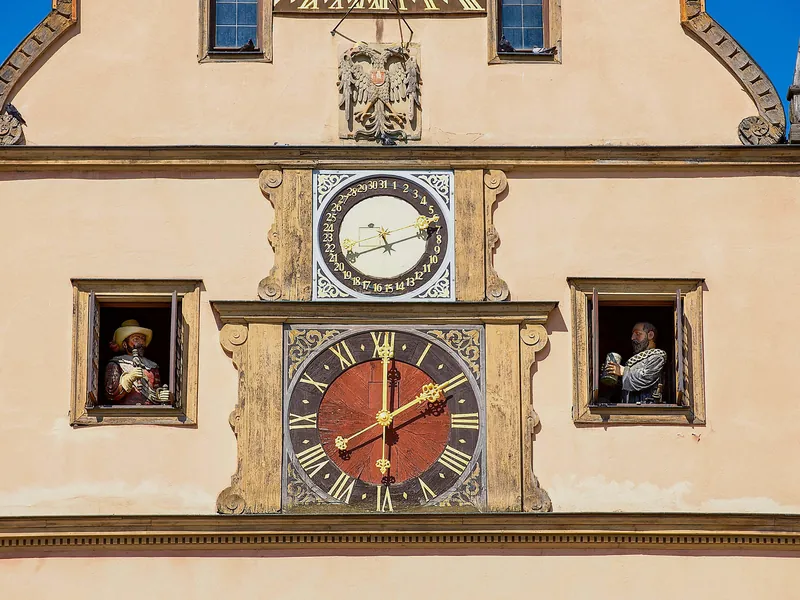
The Meistertrunk Clock
Every hour from 10:00 to 22:00, two windows open and the legend plays itself out.
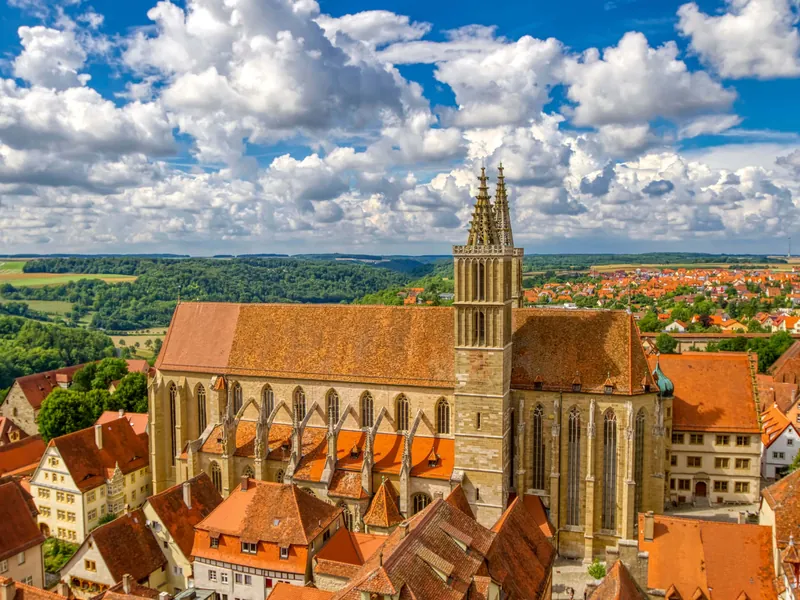
The Tauber Valley
Where the town ends and the green valley starts — the view the counts built the castle for.
How the Audio Tour Works
Buy the guide
One payment, instant access. No subscription.
Download the app
Get the TouringBee app on iOS or Android and download the tour.
Start at Marktplatz
Open the guide when you arrive, follow the offline map, and start each story yourself at each stop.
Pause & resume
Stop for a Schneeball, climb a tower, pick up exactly where you left off.
Visiting Rothenburg ob der Tauber
Getting Here: Day Trips & Transfers
Rothenburg has no mainline station — this is the part worth booking ahead
Round trips from Munich, Frankfurt & Nuremberg · hotel pickup on most
- Skips the Steinach change and the local shuttle timetable entirely
- Romantic Road coach trips often bundle Rothenburg with Harburg or Dinkelsbühl
- Most give you three to five hours free in town — exactly the window the audio guide is built for
Booked through our partner GetYourGuide. You pay the same price; we may earn a small commission.
Full Rothenburg guides — itineraries, the wall walk, Christmas & getting there →
Getting There, Staying & After Dark
The audio guide covers the walk itself. These are the things it can't do for you: getting to a town with no mainline station, finding a bed inside the walls, and filling the evening once the daytime route is done.
Some links below are affiliate links (GetYourGuide, Booking.com). If you book through them we may earn a small commission — at no extra cost to you. It never affects what we recommend.
More Audio Tours by TouringBee
Pairing Rothenburg with the rest of Bavaria or a Germany trip? These walk the same way.
Frequently Asked Questions
Is Rothenburg ob der Tauber worth visiting?
Yes, if you want a complete walled medieval town rather than a single monument. It is small — you can see the main sights in a day — and it is busy in the middle of the day in summer and in December. Arrive early, stay overnight, or come out of season and it is a different town entirely.
How long do you need in Rothenburg?
One full day covers the old town, the wall walk, a tower climb and a museum. An overnight stay is better: the coaches leave around six, and the streets empty out completely. Two hours is enough only for Marktplatz, the Plönlein and a short stretch of wall.
Is the town wall walk free?
Yes. The old town, its streets and the covered rampart walk on the wall are free and open at any hour. Only the towers you climb, the churches and the museums charge admission.
How much is the Town Hall Tower?
€4 for adults, €2 for children under 14, cash only. It is open daily from April to October (9:30–12:30 and 13:00–17:00) and at weekends only from January to March and in November.
When is the Rothenburg Christmas market in 2026?
The Reiterlesmarkt runs from 20 November to 23 December 2026, closed on Remembrance Sunday. Opening hours are 11:00–19:00 Sunday to Thursday and 11:00–20:00 on Friday and Saturday, across Marktplatz, the Grüner Markt and the church square.
How do you get to Rothenburg ob der Tauber?
There is no mainline station in the town. By train you change at Steinach bei Rothenburg onto a short local shuttle, usually coming from Würzburg, Ansbach or Nuremberg. By car it sits on the Romantic Road between Würzburg and Augsburg, with car parks outside the walls. Day-trip coaches run from Munich and Frankfurt.
What is the Night Watchman tour?
An hour-long evening walk led by a costumed night watchman, meeting on Marktplatz in front of the town hall — English at 20:00, German at 21:30, in season. It runs after dark and covers a short central loop, so it sits alongside a daytime walk of the town rather than replacing one.
Is the audio tour available offline?
Yes. Download it once in the TouringBee app and it works fully offline — no data needed inside the walls.
What languages is the audio guide in?
The Rothenburg City Walk is currently available in English and German. The TouringBee app itself supports eight languages across its catalogue.
Does it work on iPhone and Android?
Yes, the TouringBee app runs on both iOS and Android.
About the Author

This guide is written by Eugene, a former tour guide and the founder of the travel-content network paris10.travel. He has spent sixteen years building self-guided walking tours across Europe, including Rothenburg's own TouringBee audio tour. Every date, price and opening time here is checked against official sources — the town's tourist office, the museums themselves — not copied from other pages.
The aim is simple: to leave you more confident, more curious, and better prepared than you were five minutes ago — and, if you want the full story on the spot, to walk it with you through the app.
Walk Rothenburg With Every Story in Your Ears
Twenty-five stops from Marktplatz to the Hospital Bastion — the legends, the war, and the bricks with names on them.
Get the Audio Tour — from €9.99